
Showing posts with label Writing. Show all posts
Showing posts with label Writing. Show all posts
Monday, 3 June 2013

Monday, 10 December 2012
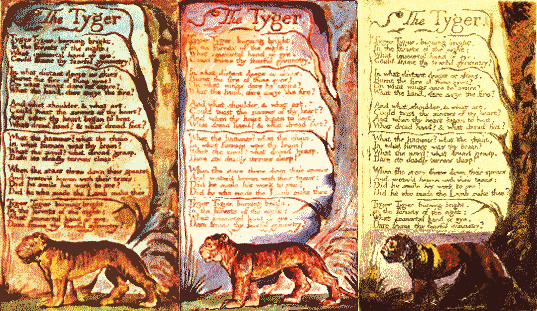
William Blake: The Tyger
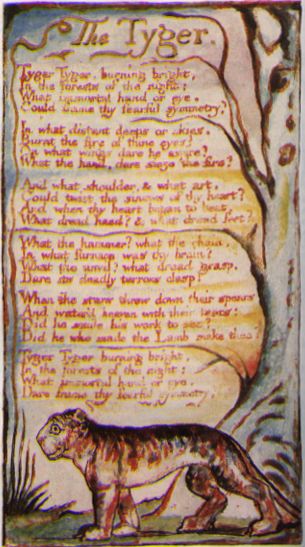
2. Post a link to a piece of music which in your opinion captures the atmosphere in the poem. Explain your choice.
3. Write a text in which you sum up and conclude on the analysis of the poem. Use our work in class and the thoughts behind your choice of music and picture.
4. Put into perspective by comparing to The Lamb (p. E9)
Don't forget to put your name on the comment! It will count as a written assignment and must be posted before the Christmas break.
Monday, 26 November 2012
Time and Distance Overcome

2. Post the quotes and ideas that, in your view, exemplify the significance of the composition of the text.
3. Post quotes and ideas on the intention of the essay.
If you have questions, ideas or comments, you may also post them here for your classmates to comment on.
Wednesday, 21 November 2012

Saturday, 27 October 2012

Sunday, 7 October 2012
Hvordan du skriver et engelsk essay
This is an instruction to essay on English B but you can use it as a guide - just take the differences in the assignment into consideration. Remember: You ARE expected to write very thorough analysis!
Thursday, 27 September 2012
Save as many as you ruin
This post is about your essay on "Save as many as you ruin". Here you can ask/answer questions and share observations.
BTW it might be a good idea to look at this link for stream of consciousness - use it if you can. It may help you get a grip on the writing style and perhaps understand the text a little better.
BTW it might be a good idea to look at this link for stream of consciousness - use it if you can. It may help you get a grip on the writing style and perhaps understand the text a little better.
Wednesday, 19 September 2012
My fav' speech
Write a comment on the following questions:
1. Which speech was your favourite?
 2. What made it better than the others?
1. Which speech was your favourite?

Thursday, 8 March 2012

Sunday, 5 February 2012
Grammatikregler
Delprøve 1- et par regler du bør kende!
#1 Ordstilling: Engelsk har altid ligefrem ordstilling. Små adverbier placeres mellem subjekt og verbum, men ellers adskilles disse ikke.
# 2 Kongruens fejl: Overensstemmelse mellem subjekt og verbum. Når substantivet står i 3. Person ental skal der -s på verbet i NUTID. Husk også at do-omskrivning skal følges af infinitiv eg. She does not likes him (she does not like him), det samme med mådeudsagnsord eg. she could likes him (she could like him)
#3 Uregelmæssigt verbum: bøjes ikke som regelmæssige og kan derfor ikke tage- ed formen i datid.
#4 Ubestemt artikel: nationaliteter/ stillingsbetegnelser/religion ideologi tager ubestemt artikel (vokal an, konsonant a)
Bestemt artikel ved noget specifikt, utællelige abstrakte substantiver - artikel e.g. love, war, time, society etc.
5# Aldrig præposition før that eller infinitiv: 1) udelad præposition 2) tilføj ’the fact’ 3) eller afliv sætningen med en ing-form
#6 adjektiv/adverbium: Adjektiver beskriver substantiver. Adverbium beskriver verbum, adjektiver, adverbium og tager oftest endelse -ly
#7 Pronominen: De engelske relative pronominer er who, which, that, whose og what. (Formen whom brugtes tidligere som objektsform af who og som styrelse for en præposition. Kun den sidste funktion bruges stadig, om end sjældent, i almindeligt, ikke-formelt sprog)
who fører tilbage til personer (og undertiden kæledyr); which fører tilbage til alt andet, dvs. ting, begreber, dyr; that kan bruges om både personer og ting mm. - men KUN i definerende relativsætninger (= en relativsætning som præciserer, hvem/hvad der tales om); whose er genitivsform (= hvis) og bruges om både personer og ting mm.
#8 Genitive: hvis ordet ender på s =s´, hvis ordet ikke ender på s=´s, of-konstruktion når ting omtaler ting.
#9 støtteord ved adjektiver: Adjektiver skal normalt have et støtteord, og her skal du huske at skrive hvilket adjektiv som behøver støtteord (på dansk kan de oftest stå som substantiv, men ikke på engelsk): thing/one/man/woman etc.
#10 Pluralis og singularis:
- Uregelmæssige Substantiv: normalt tilføjes -s i flertal, men ikke de uregelmæssige: visse tager endelsen-ve (calf-calves), mens andre ændrer vokal (man-men)
- Utællelige substantiv: money, advice, furniture, information, news etc. (S.59)
- Logisk flertal på engelsk: People´s lives, their hearts, our problems etc.
#11 Tricky verb patterns: En del verbum skal følges af ing-form og ikke infinitiv (s.38-40). Husk at skrive hvilket ord som bestemmer eg. I cannot risk losing you (verbet risk skal følges af ing-form)
#12 Forkert brug af ord: her skal du blot forklare forskellen.
#1 Ordstilling: Engelsk har altid ligefrem ordstilling. Små adverbier placeres mellem subjekt og verbum, men ellers adskilles disse ikke.
# 2 Kongruens fejl: Overensstemmelse mellem subjekt og verbum. Når substantivet står i 3. Person ental skal der -s på verbet i NUTID. Husk også at do-omskrivning skal følges af infinitiv eg. She does not likes him (she does not like him), det samme med mådeudsagnsord eg. she could likes him (she could like him)
#3 Uregelmæssigt verbum: bøjes ikke som regelmæssige og kan derfor ikke tage- ed formen i datid.
#4 Ubestemt artikel: nationaliteter/ stillingsbetegnelser/religion ideologi tager ubestemt artikel (vokal an, konsonant a)
Bestemt artikel ved noget specifikt, utællelige abstrakte substantiver - artikel e.g. love, war, time, society etc.
5# Aldrig præposition før that eller infinitiv: 1) udelad præposition 2) tilføj ’the fact’ 3) eller afliv sætningen med en ing-form
#6 adjektiv/adverbium: Adjektiver beskriver substantiver. Adverbium beskriver verbum, adjektiver, adverbium og tager oftest endelse -ly
#7 Pronominen: De engelske relative pronominer er who, which, that, whose og what. (Formen whom brugtes tidligere som objektsform af who og som styrelse for en præposition. Kun den sidste funktion bruges stadig, om end sjældent, i almindeligt, ikke-formelt sprog)
who fører tilbage til personer (og undertiden kæledyr); which fører tilbage til alt andet, dvs. ting, begreber, dyr; that kan bruges om både personer og ting mm. - men KUN i definerende relativsætninger (= en relativsætning som præciserer, hvem/hvad der tales om); whose er genitivsform (= hvis) og bruges om både personer og ting mm.
#8 Genitive: hvis ordet ender på s =s´, hvis ordet ikke ender på s=´s, of-konstruktion når ting omtaler ting.
#9 støtteord ved adjektiver: Adjektiver skal normalt have et støtteord, og her skal du huske at skrive hvilket adjektiv som behøver støtteord (på dansk kan de oftest stå som substantiv, men ikke på engelsk): thing/one/man/woman etc.
#10 Pluralis og singularis:
- Uregelmæssige Substantiv: normalt tilføjes -s i flertal, men ikke de uregelmæssige: visse tager endelsen-ve (calf-calves), mens andre ændrer vokal (man-men)
- Utællelige substantiv: money, advice, furniture, information, news etc. (S.59)
- Logisk flertal på engelsk: People´s lives, their hearts, our problems etc.
#11 Tricky verb patterns: En del verbum skal følges af ing-form og ikke infinitiv (s.38-40). Husk at skrive hvilket ord som bestemmer eg. I cannot risk losing you (verbet risk skal følges af ing-form)
#12 Forkert brug af ord: her skal du blot forklare forskellen.
Sunday, 29 January 2012
Thursday, 19 January 2012
Thursday, 15 December 2011
Monday, 28 November 2011
Thursday, 17 November 2011
David Horowitz quote

Read the following quoteation taken from an article by David Horowitz, an American poitical and cultural commentator. Look up the words you do not know.
"A gun - do I really have to spell it out? - is an inanimate object. It takes a human brain to pull the trigger. Firearms don't kill people. Sociopaths do. If young black males abuse firearms in an irresponsible and criminal fashion, why should the firearm industry be held accountable? Why not their parents? Why not themselves?"
a) Write down one argument that supports Horowitz's statement above, beginning "I agree with Howowitz because..."
b) Write down one argument which speaks against Horowitz' statement above, beginning "I disagree with Horowitz because..."
"A gun - do I really have to spell it out? - is an inanimate object. It takes a human brain to pull the trigger. Firearms don't kill people. Sociopaths do. If young black males abuse firearms in an irresponsible and criminal fashion, why should the firearm industry be held accountable? Why not their parents? Why not themselves?"
a) Write down one argument that supports Horowitz's statement above, beginning "I agree with Howowitz because..."
b) Write down one argument which speaks against Horowitz' statement above, beginning "I disagree with Horowitz because..."
Subscribe to:
Posts (Atom)